
Table of Contents (Tap to view)
- 1. The Golden Rule before taking out the tape measure
- 2. Measuring width & applying the right fullness ratio
- 3. Measuring height with watchmaker precision
- 4. The exact mathematical yardage formula of our atelier
- 5. Flemish pleats, ripple wave or eyelets: visual and fullness impact
- 6. The 4 critical measurement mistakes to avoid
- 7. Frequently Asked Questions (FAQ)
1. The Golden Rule before taking out the tape measure
Nothing is more frustrating than a pair of custom curtains cut two centimeters too short or lacking fullness in front of an expansive floor-to-ceiling bay window.
Bespoke tailoring follows immutable geometric rules. Before anything else, observe this absolute commandment of our master artisans: always install your curtain rod or ceiling track before taking final measurements. Attempting to measure from an imaginary line on a raw wall is guaranteed to cause disappointment during final installation.
Always use a rigid steel tape measure or a professional laser distance meter. Flexible tailor cloth tapes stretch under tension and introduce errors of 1 to 3 cm across tall drops.
2. Measuring width & applying the right fullness ratio
A luxury curtain should never be a flat, taut surface pulled like a hospital sheet. Its nobility and prestige stem from the generous rhythm of its undulating folds.
To achieve an architectural wave, apply a fullness ratio (between 1.8x and 2.2x depending on fabric weight and pleat style) to the rod or track length:
Do not forget to add side returns (+ 10 cm per wall edge) and center overlap (+ 5 cm) to prevent light infiltration at the center when curtains are drawn.
“In luxury design, scrimping on fabric fullness is immediately obvious to the naked eye. It is far better to specify a simpler textile with generous 2.2x fullness than a sumptuous silk hung taut without any body.”
3. Measuring height with watchmaker precision
Always measure the drop height at three distinct points: at the left, center, and right of the window opening.
In traditional Moroccan riads as well as contemporary villas, floors and ceilings almost invariably feature a slight slope of 5 to 15 mm. When discrepancies occur, our atelier custom-shapes the hem gradient so that the fall appears rigorously parallel to the finished floor.
Starting reference points for measurement:
Every fabric width is cut along the true thread grain in our Marrakech manufacture to prevent bowing or twisting.
4. The exact mathematical yardage formula of our atelier
To calculate the exact linear yardage required from roll bolts (standard Kansotex width of 140 cm or double width of 280 cm):
Formula for Double Width Fabric (280 cm Bolt):
When the fabric is woven in double width (280 cm), curtain drop fits into the roll width, running railroaded horizontally.
Yardage to order = (Track Length × Fullness Ratio) + 30 cm for double side hems.
Formula for Standard Width Fabric (140 cm Bolt):
Number of widths required = (Track Length × Fullness Ratio) ÷ 130 cm.
Length per width = Finished Drop Height + 35 cm (20 cm double weighted hem + 15 cm pleated header).
Total linear fabric to order = Number of widths × Length per width.
5. Flemish pleats, ripple wave or eyelets: visual and fullness impact
The header style determines not only the decorative character of the room, but also how compactly the drapery stacks when opened during daylight hours:
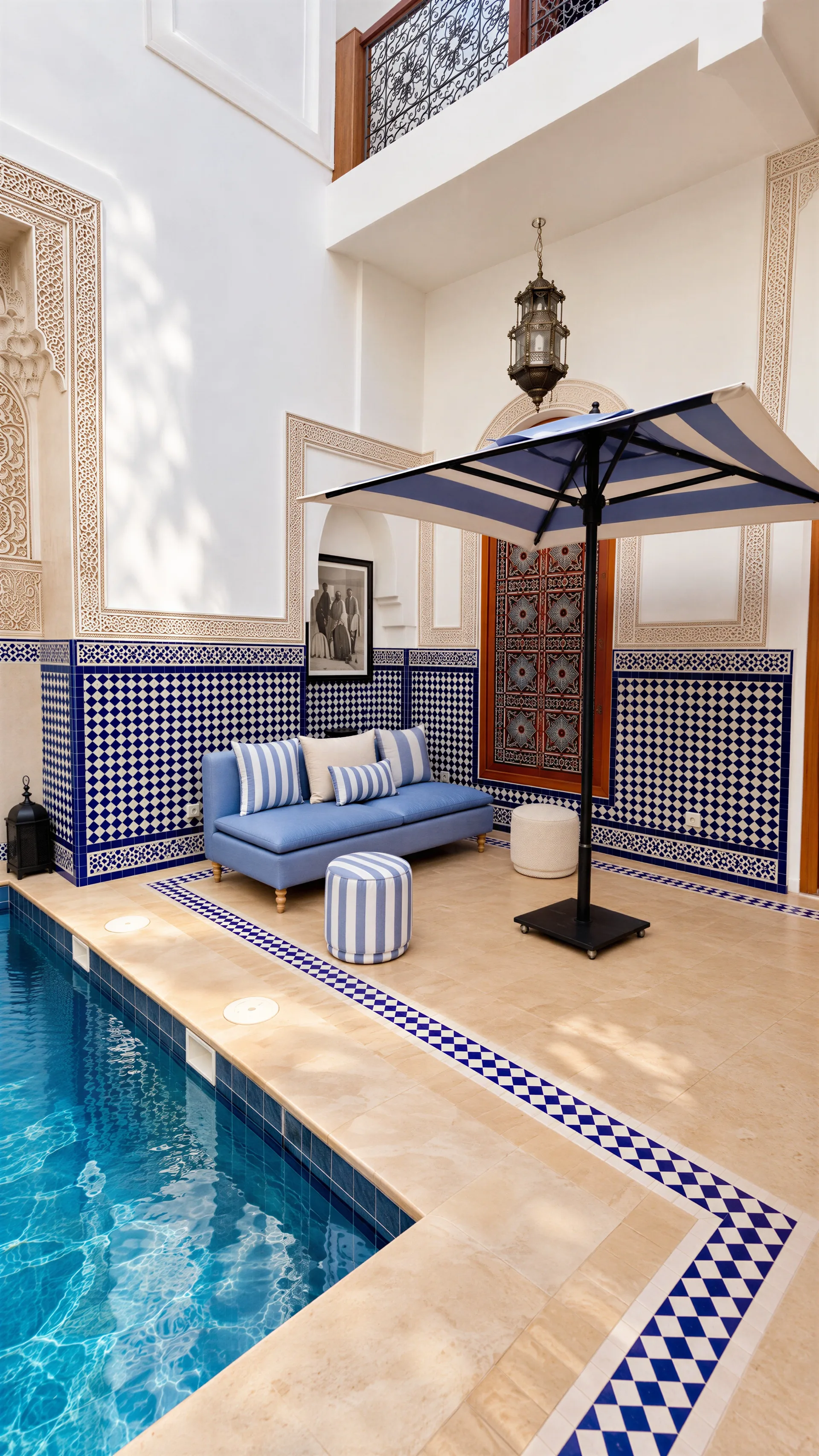
Haute couture drapery finishing: crisp pinch pleat header with a 2.5 cm gentle break puddle resting elegantly on traditional zellige floors.
6. The 4 critical measurement mistakes to avoid
7. Frequently Asked Questions (FAQ)
Explore direct answers from our technical team to guarantee precision for your residential or hotel projects.
Fabric Fullness Multipliers by Pleating Style & Visual Aesthetic
| Technical Criteria | Kansotex Marrakech | Market Standard | Practical Impact |
|---|---|---|---|
| Contemporary Wave Fold (Wave / Ripplefold) | 2.2x to 2.4x track width | 1.5x (Skimpy, flat pleats) | Creates continuous, architectural S-waves with flawless alignment from ceiling to floor. |
| Double Tailored Pinch Pleat (French Pleats) | 2.3x track width | 1.8x (Gapping pleats) | Delivers timeless neoclassical elegance, keeping pleats crisp even across grand patio French doors. |
| Heavyweight Blackout Linings | Full 100% blockout with thermal barrier | Simple cotton lining (50% blockout) | Ensures complete sleeping darkness in guest suites and preserves delicate face fabrics from Atlas UV. |
| Bottom Hem Weighting | Double 10 cm blind-stitched hem with leaded cord | Single machine-stitched 3 cm hem | Provides optimal gravitational weight so drapes hang straight without billowing in garden breezes. |
Curated In-Stock Materials in Marrakech
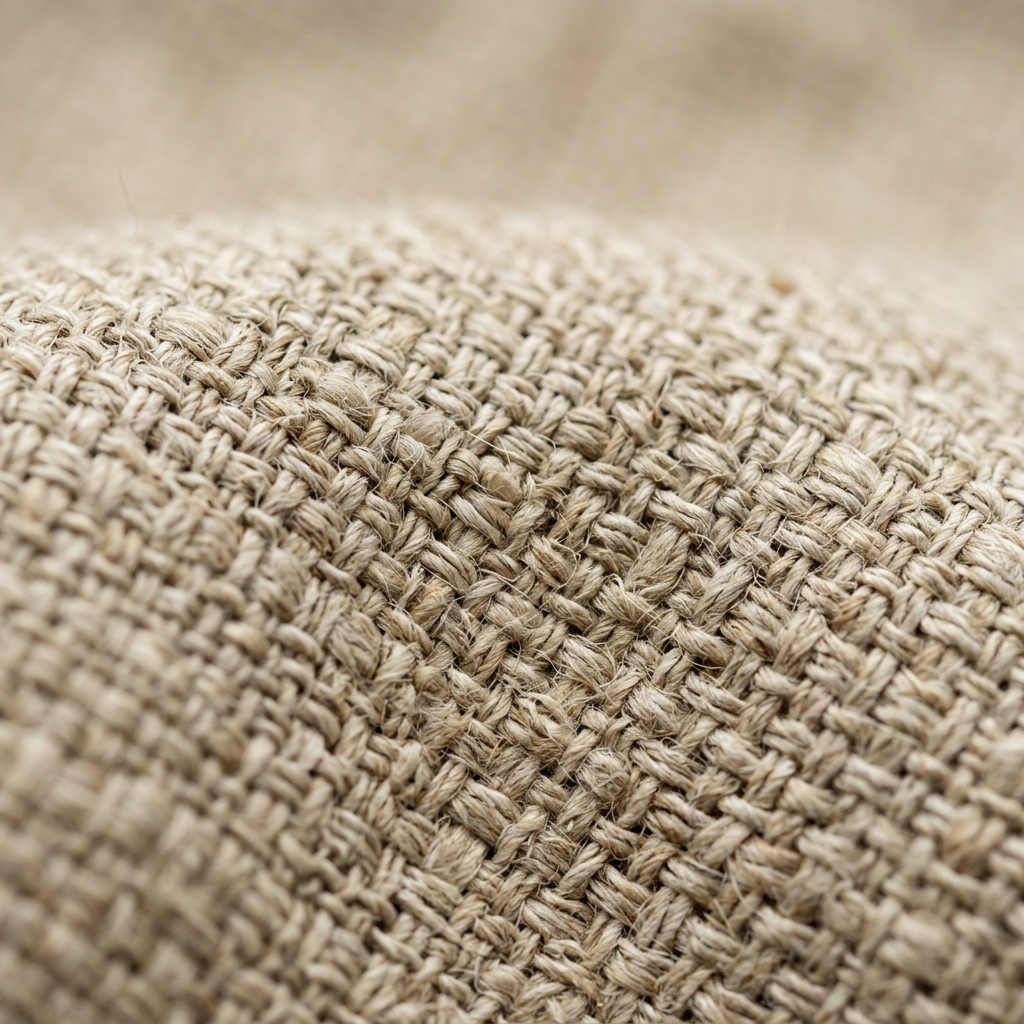

Frequently Asked Questions
Always measure from the exact underside of the track glider or ring eyelet down to the floor covering (parquet, marble, or bejmat). For ceiling-recessed architectural tracks, measure directly from the ceiling groove to the floor with a laser distance meter.
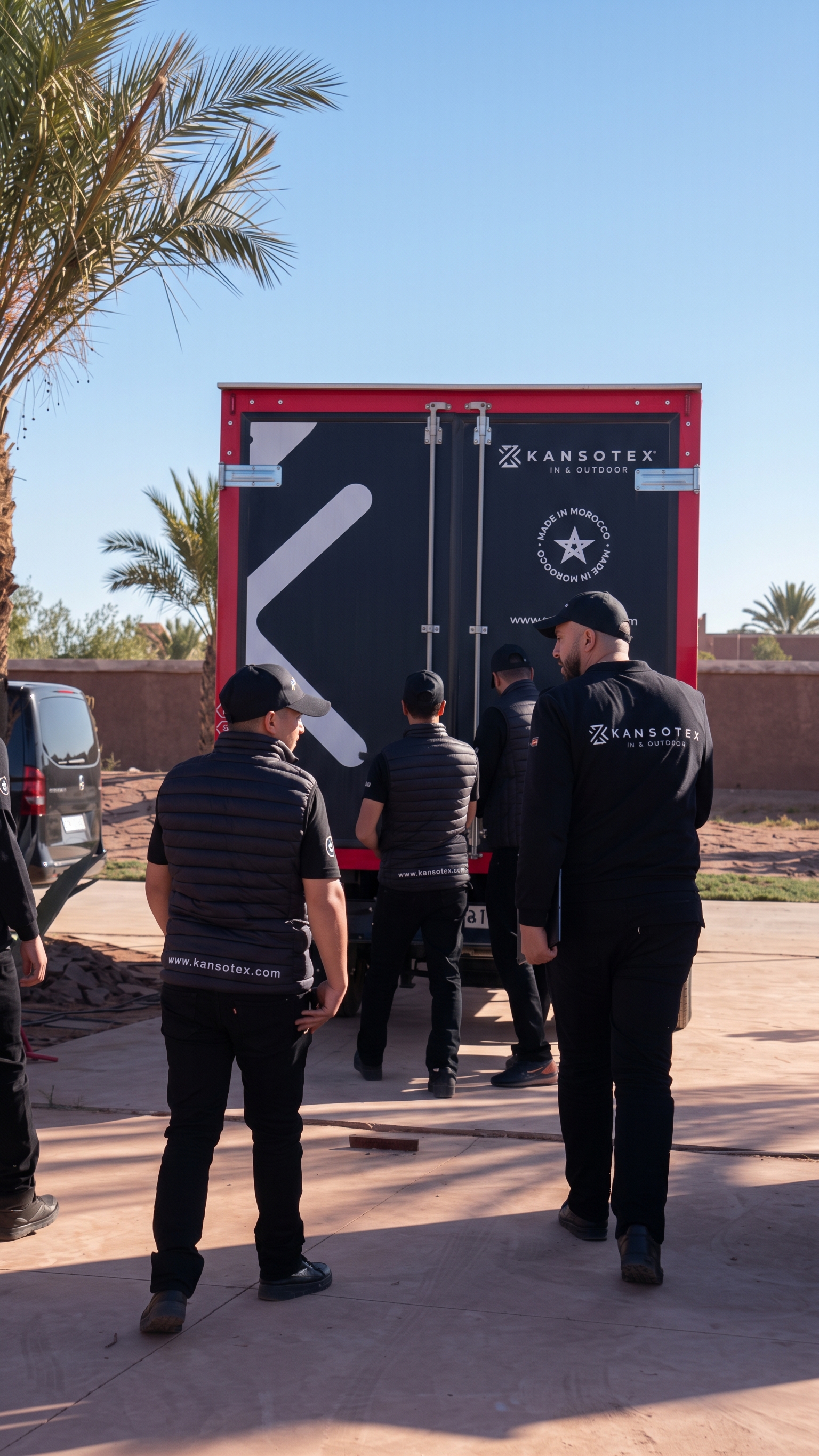
Maître Hassan & L'Atelier Kansotex
Direction Technique de Confection — Marrakech
Plus de 25 ans d'expertise dans le tissage traditionnel et la haute tapisserie d'ameublement in & outdoor à Marrakech. Conseille architectes et riads de prestige.